Launch offer — valid today only

📄 Digital book in PDF · read it on your phone or print it

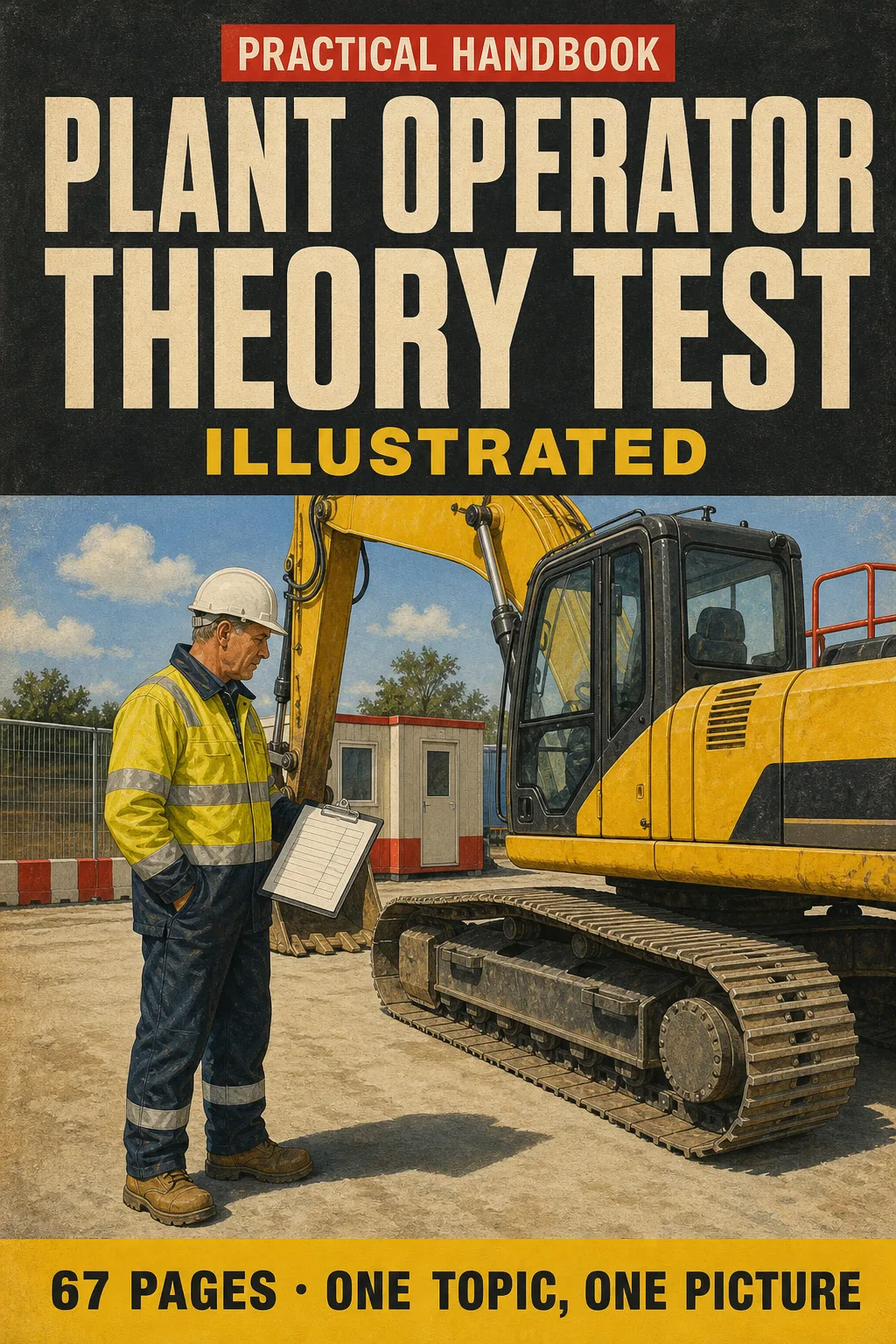
The Plant Operator Theory Test and Site Rules in Drawings One Topic on Every Page

For the CPCS or NPORS plant theory test, with pages for the 360 excavator and the dumper. Site rules, the walk-round, control patterns, gradients, overhead lines, buried services, trench collapse, load charts and banksman signals. One page per topic: the drawing first, then what you need to remember. 67 illustrated pages.

GET THE BOOK + 2 FREE BOOKS

🔒 Secure checkout · PDF by email · 30-day guarantee

Every topic, its own pageEach rule drawn as you see it from the cab, with the explanation beside it
67 illustrated pages9 parts, from the card and the test to the night-before checklist
Up-to-date sourcesHSE guidance, CDM 2015, PUWER and LOLER 1998
PDF by emailFormat

Look Inside the Book

Every page has one big drawing and a box with the distances, gradients and steps you need to know:

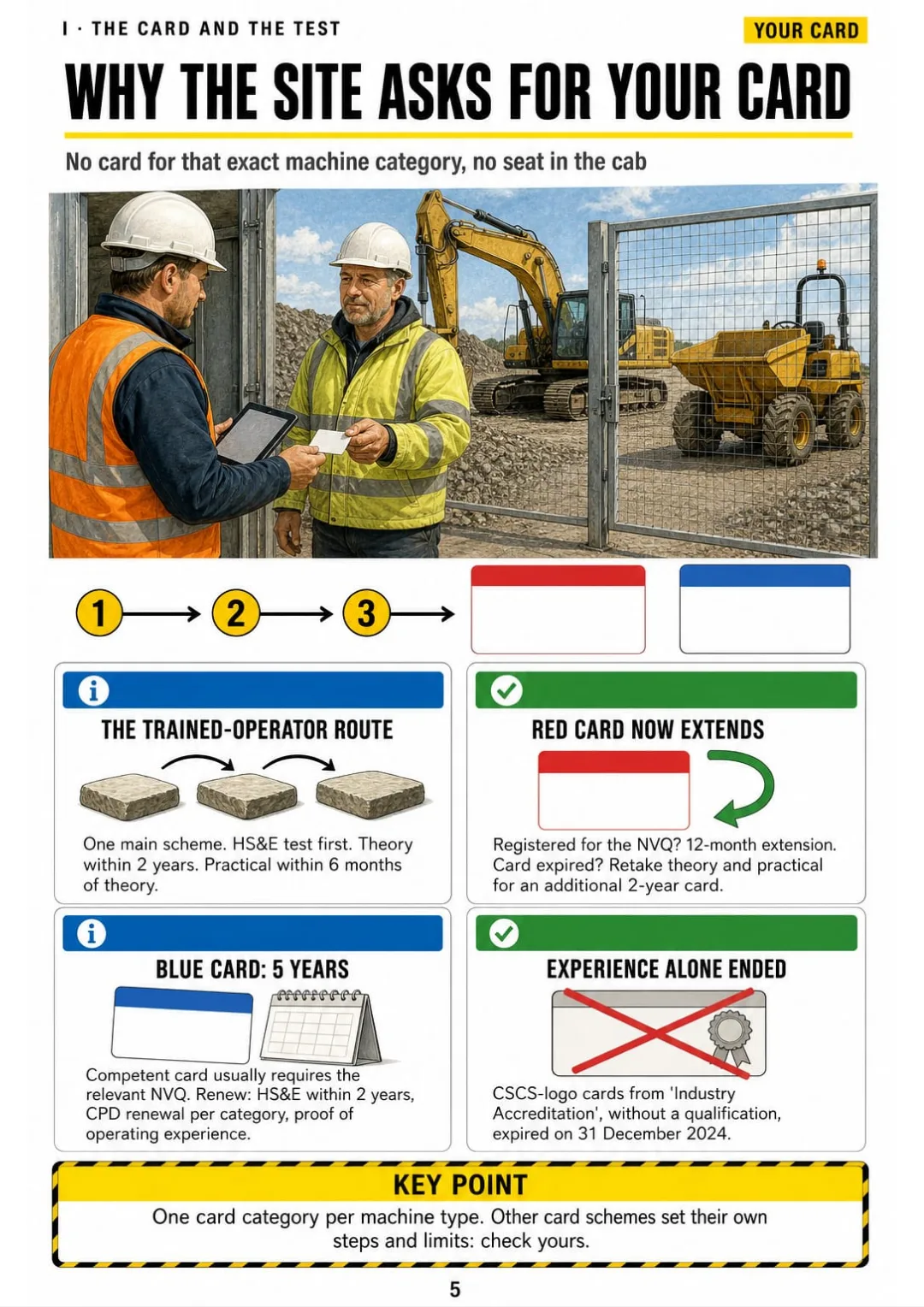
Trained-operator route: HS&E test → theory within 2 years → practical within 6 months, inside the 2-year HS&E window.
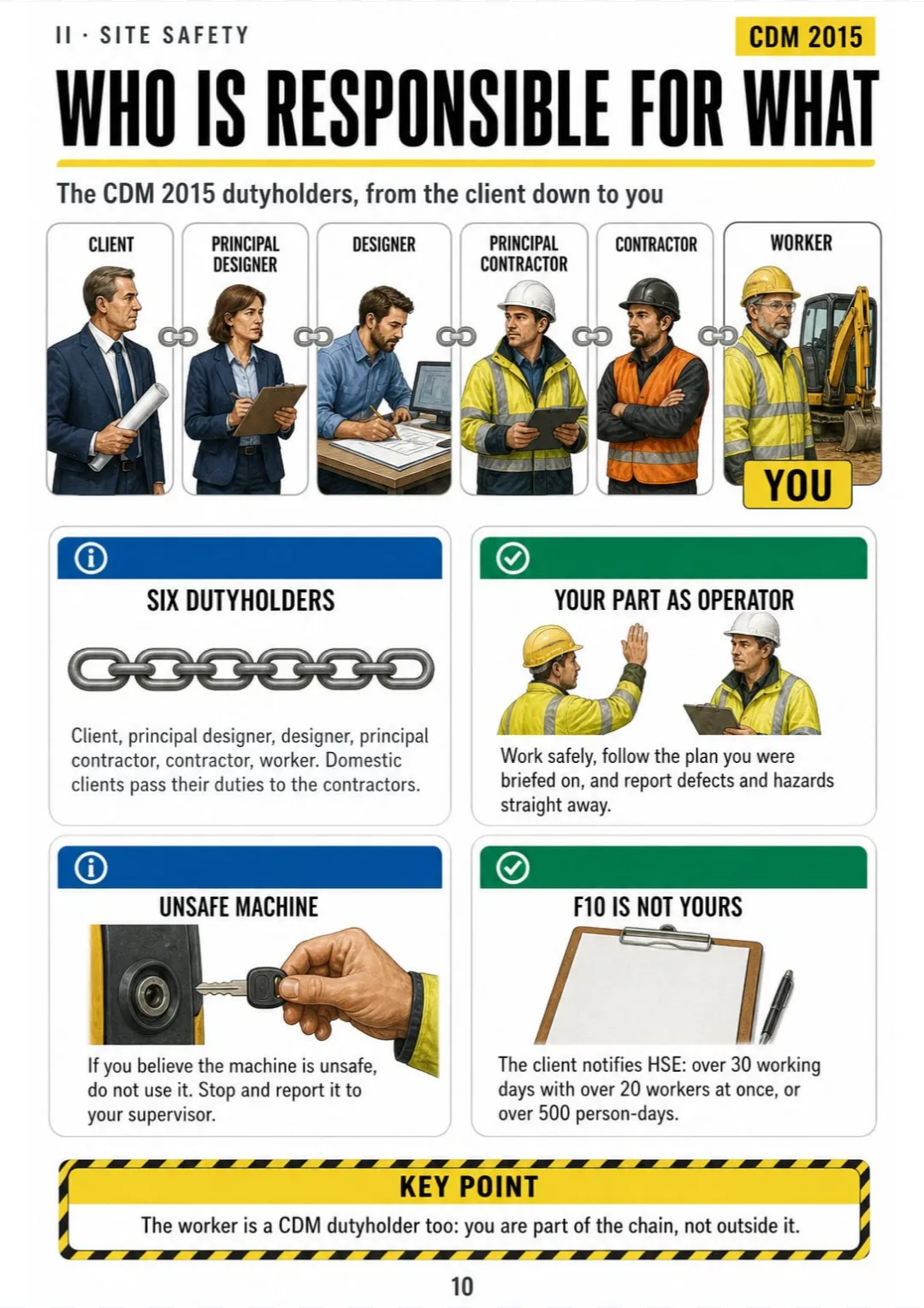
CDM 2015: client, principal designer, designer, principal contractor, contractor, worker
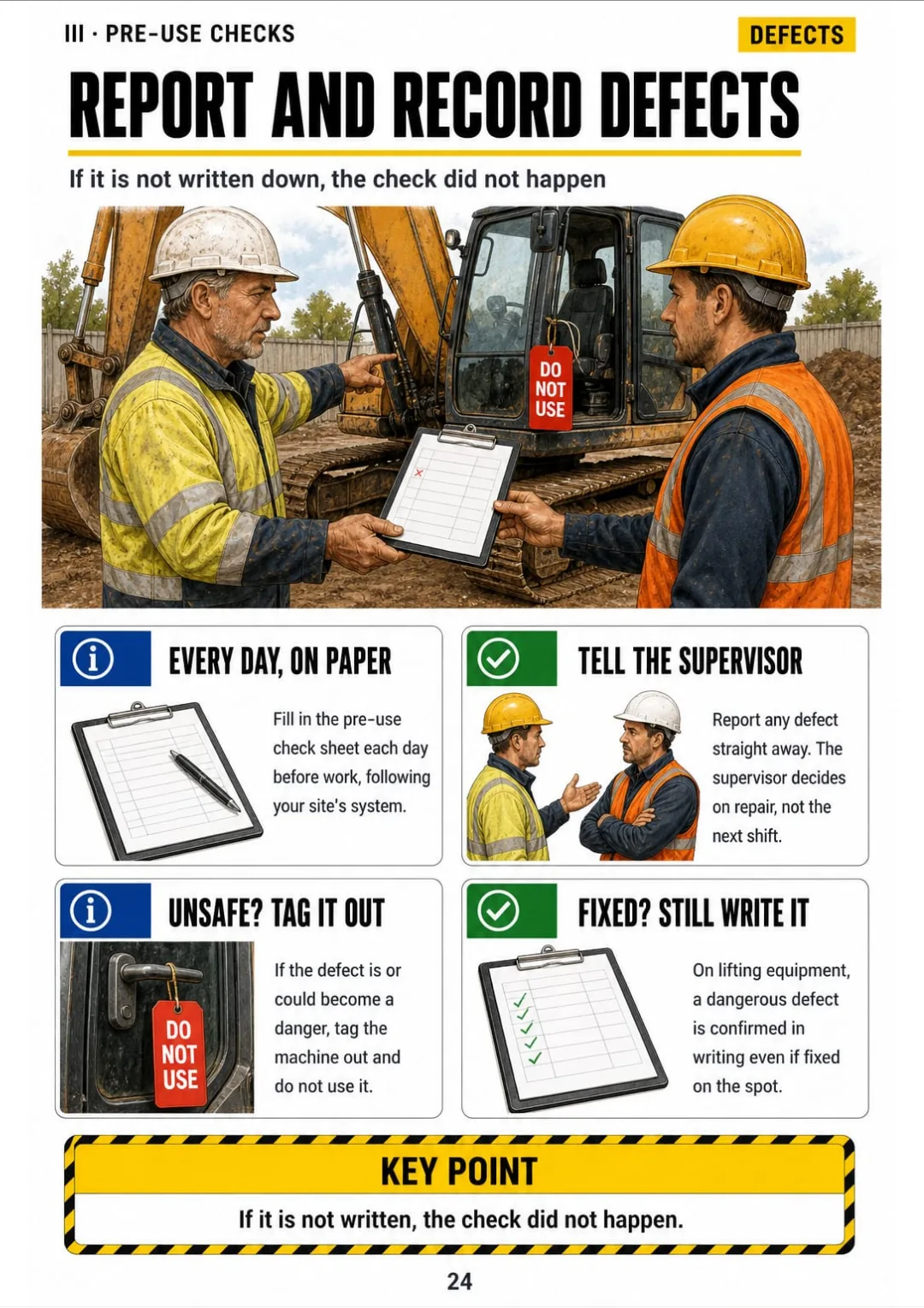
Daily check sheet, defect reported to the supervisor, 'do not use' tag if unsafe.
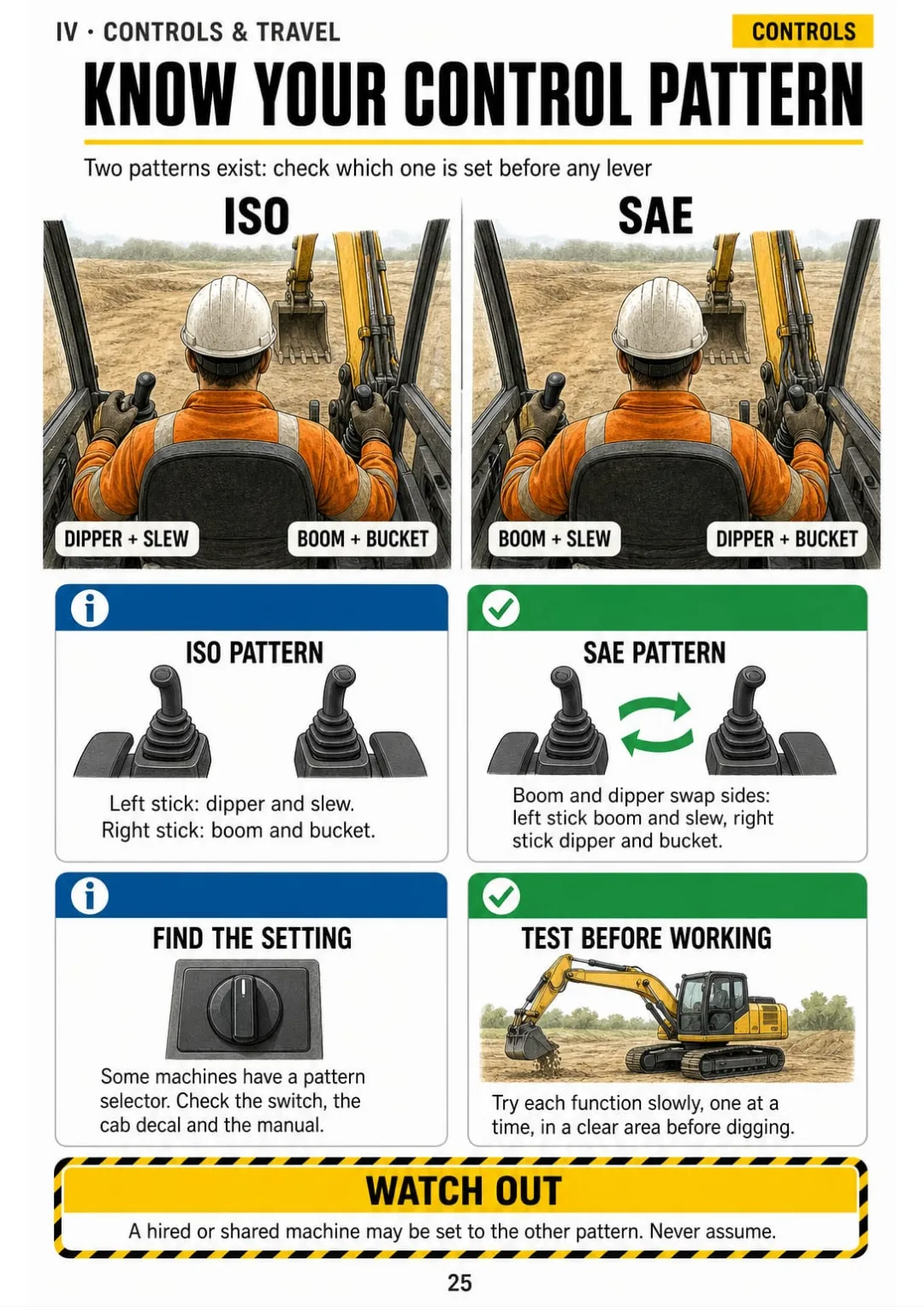
ISO vs SAE: boom and dipper swap sticks — check the setting first
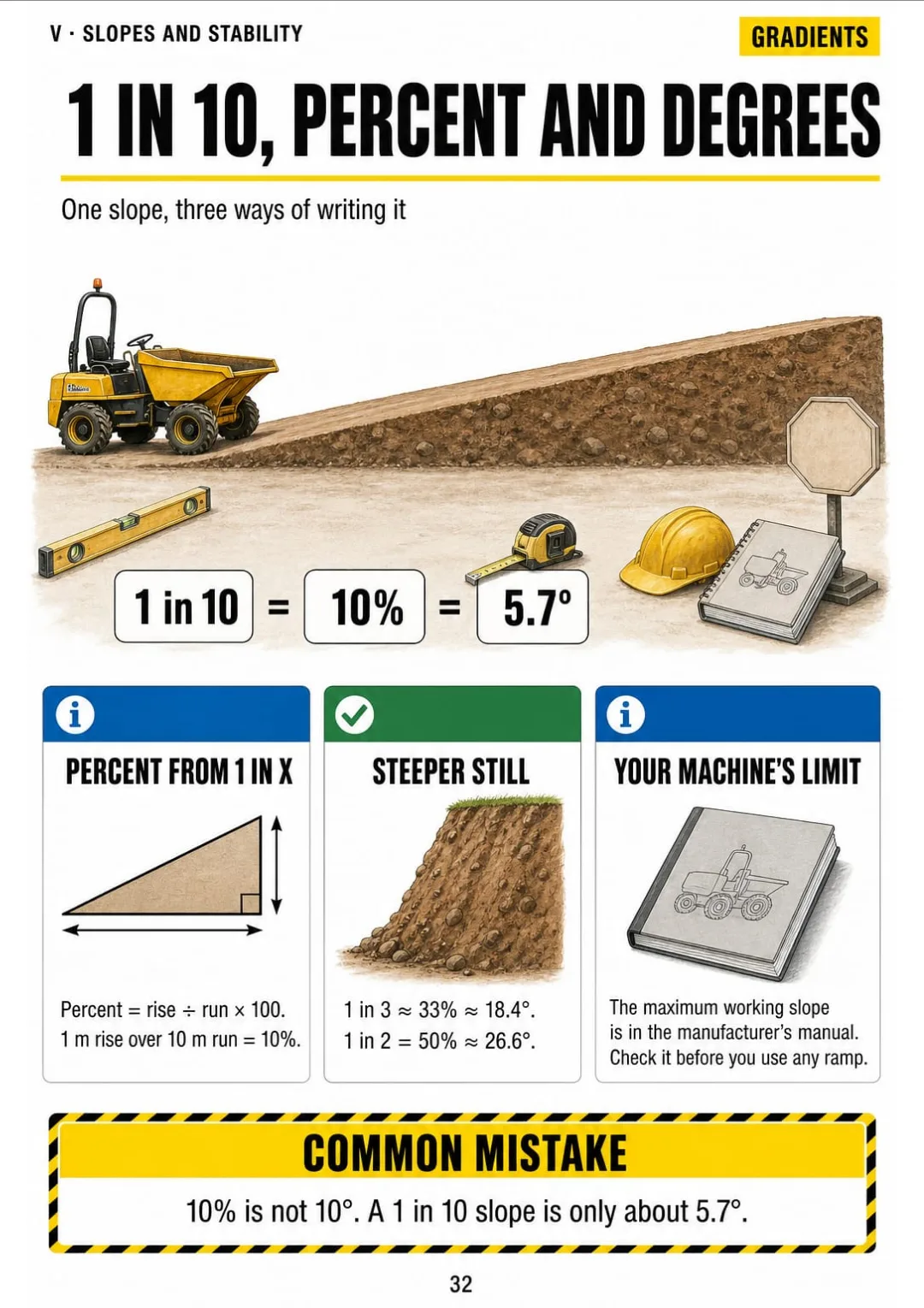
1 in 10 = 10% ≈ 5.7° · 1 in 5 = 20% ≈ 11.3° · 1 in 4 = 25% ≈ 14°
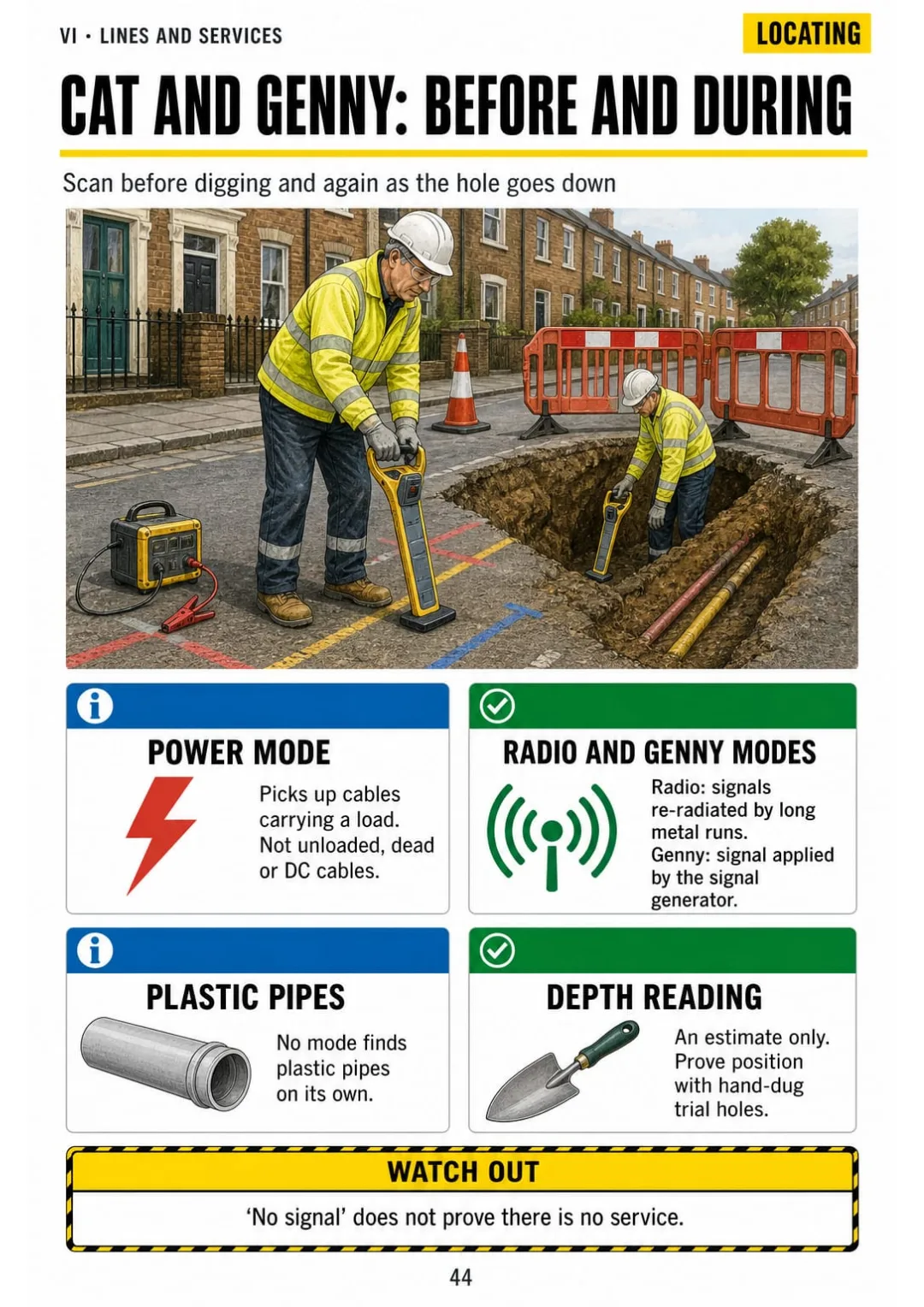
CAT and Genny before and during the dig; no signal does not prove there is no service.
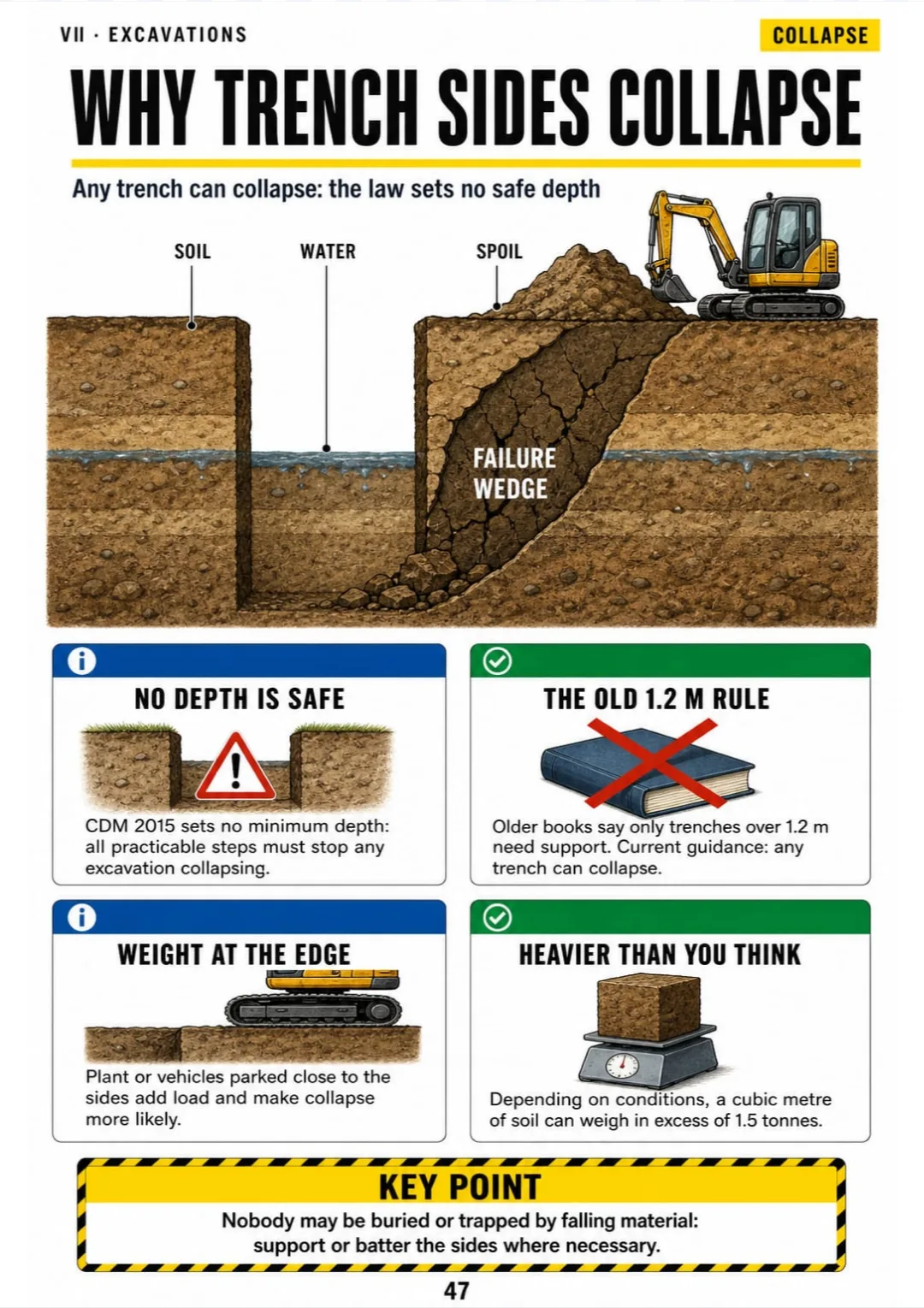
CDM 2015: no depth is automatically safe; soil, water and edge loads cause collapse
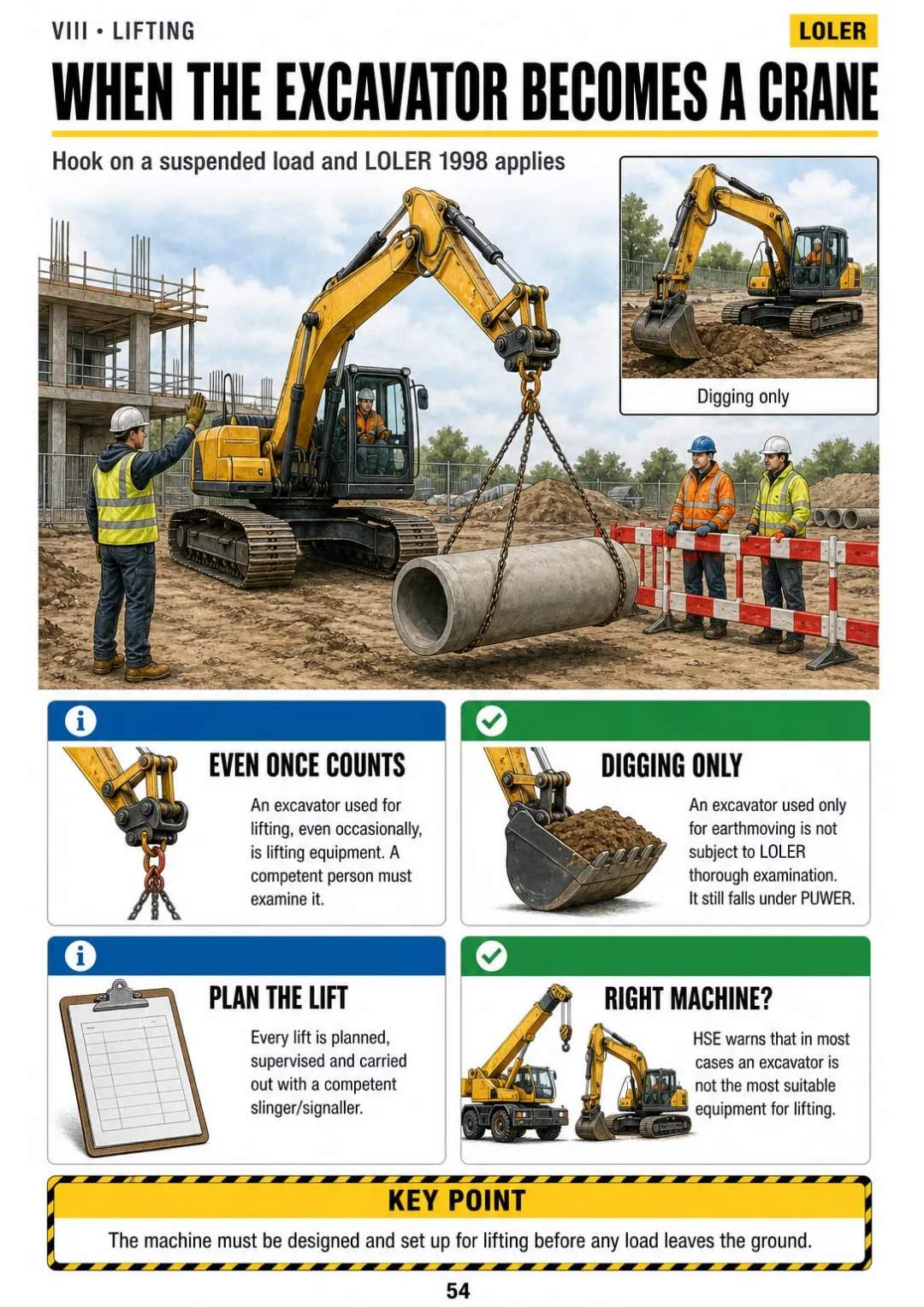
Used for lifting even once: the 360 becomes lifting equipment under LOLER 1998.

Swipe to see more →

These are real pages from the book. The table of contents is the full one: 9 parts and 63 topics.

The Problem Isn't You. It's How It Was Explained to You.

You're sitting at the test screen and the question asks about the pre-use walk-round. You've done one every morning for years, but on screen it's in words you never say on site.

In the manual the walk-round is half a page of paragraphs: fluids, hoses, pins, tracks, cab, all in one long list. No order, no machine, nothing to picture. So you read it in the evening and it's gone by the morning.

Daily check sheet, defect reported to the supervisor, 'do not use' tag if unsafe.

In this book the walk-round is one drawing: seven stops around the machine, from the ground under it to the cab, always the same circuit, with each stop numbered on the page.

The same goes for everything else: gradients as 1 in 10, percent and degrees, the 10 m planning zone for overhead lines, why trench sides collapse, ISO and SAE control patterns, and when your 360 becomes a crane under LOLER. Each one has its own page.

You see the page and you recognise your own working day. You understand what the question is really asking, and you answer it without going back to the manual.

COMPARE FOR YOURSELF

The Same Topic, Two Ways to Revise It

THIS
  • The manual: line after line of text
  • Duty holders explained only in words
  • You walk into the test still unsure
Under the Construction (Design and Management) Regulations 2015, duties are allocated to a number of duty holders, including the client, the principal designer, designers, the principal contractor, contractors and workers. The client is responsible for making suitable arrangements for managing a project, while the principal contractor plans, manages and monitors the construction phase where more than one contractor is involved. Contractors must plan, manage and monitor their own work, and workers are required to cooperate, report anything likely to endanger themselves or others and follow the arrangements in place.
FOR THIS
  • Who does what on site, in one drawing
  • The six roles in one box
  • You see it and it makes sense
CDM 2015: client, principal designer, designer, principal contractor, contractor, worker
CONTENTS

Take a Look at the 9 Parts and 63 Topics

The card and the test, site safety and the law, pre-use checks, controls and travelling, slopes and stability, overhead lines and buried services, excavations and loading, lifting and banksman signals, shut-down and revision: 67 pages, all illustrated

IThe Card and the Test · pp. 5-9
  1. Why the site now asks for your card
  2. How the theory test works
  3. Read the question like a tester
  4. How to use this book in 20 minutes a day
  5. Words you use on site vs words in the test
IISite Safety and the Law · pp. 10-16
  1. Who is responsible for what on site
  2. PUWER: the machine must be fit for the job
  3. Risk assessment and method statement
  4. Site induction and the traffic plan
  5. PPE for plant operators
  6. Noise, vibration and dust
  7. Protecting the environment
IIIPre-Use Checks and Getting On · pp. 17-24
  1. The walk-round: always the same circuit
  2. Fluid levels: what to check and when
  3. Tracks, tyres and undercarriage
  4. Hydraulic hoses and pins
  5. Quick hitch: the check people skip
  6. Inside the cab: before you start
  7. Three points of contact
  8. Report and record defects
IVControls, Starting and Travelling · pp. 25-31
  1. Know your control pattern
  2. Starting up safely
  3. Which way are the tracks facing?
  4. Travelling position
  5. Blind spots and exclusion zones
  6. Tail swing and slewing
  7. Working near people and other plant
VSlopes, Ground and Stability · pp. 32-39
  1. Gradient: 1 in 10, percent and degrees
  2. Up and down, never across
  3. Loaded forward-tip dumper on a slope
  4. Seat belt and roll-over protection
  5. Ground conditions and bearing
  6. Centre of gravity and the stability triangle
  7. Stop blocks and tipping at edges
  8. Weather: rain, ice, wind and fog
VIOverhead Lines and Buried Services · pp. 40-46
  1. Overhead lines: the distances to know
  2. Barriers and goalposts
  3. If you touch an overhead line
  4. Buried services: plans first
  5. CAT and Genny before and during
  6. Safe digging near a marked service
  7. If you strike a service
VIIExcavations and Loading · pp. 47-53
  1. Why trench sides collapse
  2. Battering, stepping and support
  3. Keeping the edge clear
  4. Inspections of excavations
  5. Digging sequence with a 360
  6. Loading a dumper or lorry
  7. People in or near the trench
VIIILifting and Banksman Signals · pp. 54-61
  1. LOLER: when the excavator becomes a crane
  2. What a lifting excavator must have
  3. Thorough examinations
  4. Reading a load chart
  5. Radius changes everything
  6. Slings and accessories
  7. Banksman hand signals: the basics
  8. Banksman hand signals: movement
IXShut-Down, Emergencies and Revision · pp. 62-67
  1. Parking and shutting down
  2. Refuelling safely
  3. Fire and other emergencies
  4. Ten traps in test questions
  5. The whole day in one page
  6. Night-before checklist

One Page, One Topic, All Clear

Think of it this way:

You're tracking a 360 across site, there's an overhead line ahead and the banksman is waving you on. The test asks exactly that moment: how close is too close?

In the book you open the overhead lines page and see it from the cab: the 10 m planning zone, measured from below the nearest wire, with the goalposts and barriers drawn in place.

1 in 10 = 10% ≈ 5.7° · 1 in 5 = 20% ≈ 11.3° · 1 in 4 = 25% ≈ 14°

The same with gradients, trench edges, the quick hitch check, load charts and banksman signals: each one on its own page, in the order of a real working day.

Plant Operator Theory Test Illustrated is 9 parts and 63 topics, all drawn, with ten traps in test questions, the whole day on one page and a night-before checklist at the end.

What you see drawn, you don't have to memorize.

What's Inside Plant Operator Theory Test Illustrated:

Ipp. 5-9

The Card and the Test

Why the site asks for your card, how the theory test works, how to read a question, 20 minutes a day and site words vs test words

IIpp. 10-16

Site Safety and the Law

Who is responsible for what under CDM, PUWER, risk assessments and method statements, induction and the traffic plan, PPE, noise, vibration, dust and the environment

IIIpp. 17-24

Pre-Use Checks and Getting On

The walk-round as the same circuit every time, fluids, tracks and tyres, hoses and pins, the quick hitch, the cab, three points of contact and reporting defects

IVpp. 25-31

Controls, Starting and Travelling

Control patterns, starting up, which way the tracks face, travelling position, blind spots, exclusion zones, tail swing and working near people

Vpp. 32-39

Slopes, Ground and Stability

Gradients in ratio, percent and degrees, up and down never across, the forward-tip dumper, seat belts and ROPS, ground, centre of gravity, stop blocks and weather

VIpp. 40-46

Overhead Lines and Buried Services

Overhead line distances, barriers and goalposts, what to do if you touch a line, service plans, CAT and Genny, safe digging and service strikes

VIIpp. 47-53

Excavations and Loading

Why trench sides collapse, battering, stepping and support, keeping the edge clear, inspections, the 360 digging sequence and loading a dumper or lorry

VIIIpp. 54-61

Lifting and Banksman Signals

When the excavator becomes a crane under LOLER, what a lifting excavator needs, thorough examinations, load charts, radius, slings and banksman signals

IXpp. 62-67

Shut-Down, Emergencies and Revision

Parking and shutting down, refuelling, fire and emergencies, ten traps in test questions, the whole day on one page and the night-before checklist

At the end of the book: Worked examples on gradients and load charts, ten traps in test questions, the whole day on one page and a night-before checklist.
Plus: 2 Free Books

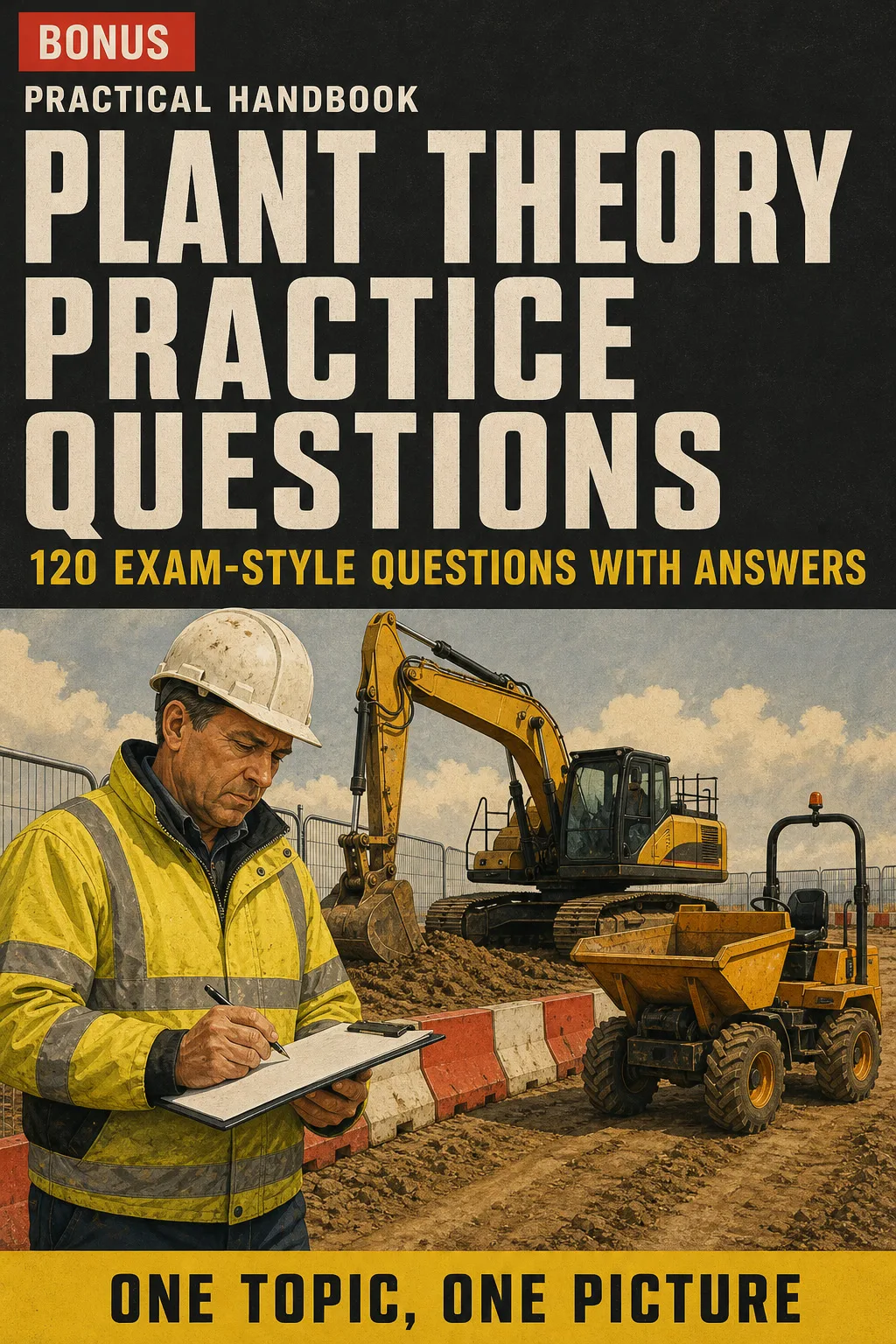
Plant Theory Practice Questions: 120 Exam-Style Questions with Answers

BONUS 1: «Plant Theory Practice Questions: 120 Exam-Style Questions with Answers»

Value on its own: US$ 17.90

Test yourself topic by topic before the real thing, with every answer explained in one short line so you know why, not just what.

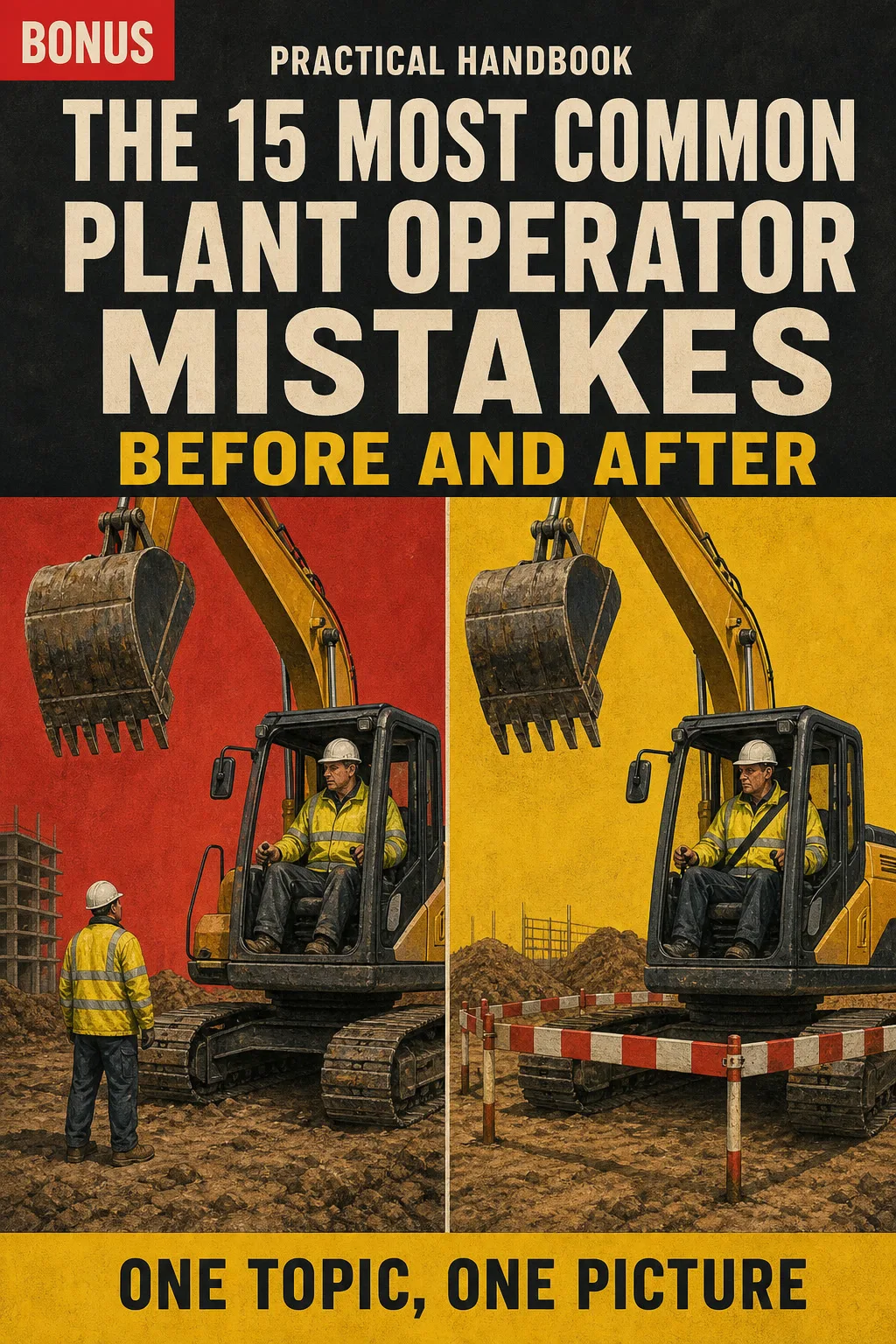
The 15 Most Common Plant Operator Mistakes: Before and After

BONUS 2: «The 15 Most Common Plant Operator Mistakes: Before and After»

Value on its own: US$ 14.90

See the slips that trip up experienced operators, each one drawn wrong and then right, so you spot them in a question and on site.

Plant Operator Theory Test Illustrated with 2 Free Books

  • Plant Operator Theory Test Illustrated: 67 illustrated pagesUS$ 63
  • BONUS 1: Plant Theory Practice Questions: 120 Exam-Style Questions with AnswersUS$ 17.90
  • BONUS 2: The 15 Most Common Plant Operator Mistakes: Before and AfterUS$ 14.90
  • High-resolution PDF to printIncluded
Total value US$ 95.80
YOUR PRICE:
US$ 27
You save US$ 68.80
YES, I WANT PLANT OPERATOR THEORY TEST ILLUSTRATED FOR US$ 27

📄 This is a digital PDF book sent to your email: nothing is printed or shipped.

Secure purchaseEncrypted payment30-day guarantee

PDF by email: We email you Plant Operator Theory Test Illustrated as a PDF, together with the two free books. It's a single payment: no installments, no extra charges.

Who This Book Is For

You've worked plant for years without a card

You've worked plant for years without a card

You know the machine. Here the theory is in test words, drawn one topic per page and in the order of a working day, so the questions sound like your own job.

Your test date is booked

Your test date is booked

Short sessions after work, always in the same order, plus 120 practice questions to check yourself topic by topic before the day.

You already work on site

You already work on site

The reasons behind the rules you follow every day, from overhead lines to trench edges, drawn so you can keep the book in the van.

Everything You Get Today

US$ 95.80US$ 27
YES, I WANT PLANT OPERATOR THEORY TEST ILLUSTRATED FOR US$ 27

📄 This is a digital PDF book sent to your email: nothing is printed or shipped.

30DAYS
GUARANTEE

30-Day Guarantee

Try Plant Operator Theory Test Illustrated for 30 days, bonus books included.

We refund everything if the file won't open, if the book isn't what you see here, if you were charged twice or if the email doesn't arrive. Just email us.

You pay once. No subscriptions.

Frequently Asked Questions

Is it for me if I've worked plant for years but never sat a theory test?

Yes. It's written for operators who know the machine and need the theory in test words. The shared topics (site safety, checks, slopes, overhead lines and buried services, excavations, lifting and banksman signals) apply whatever your category. The machine pages cover the 360 excavator and the forward-tip dumper. There are no telehandler-specific pages: if your test is telehandler only, the shared parts help, but the machine part isn't covered.

Where does the content come from?

From current UK guidance and regulations: HSE guidance on overhead lines, underground services, excavators, dumpers and quick hitches, CDM 2015, PUWER 1998, LOLER 1998 and the Safety Signs and Signals Regulations 1996. Each page is checked against that guidance and explained with our own drawings. Test formats can change by scheme, so confirm the current format with your test centre.

Is this official material?

No. It's an independent study guide. It isn't affiliated with or endorsed by any card scheme, awarding organisation or HSE.

Does it replace the training course?

No. It helps you revise the theory. It doesn't give you a card or a certificate, and it doesn't replace approved training, the practical test or the instructions on your site.

Are the practice questions the ones in the real test?

No. The 120 questions are written for this book to help you practise. They aren't official test questions.

When and how do I get it?

The book and the 2 bonus books come as PDFs by email, to the address you enter at checkout.

Do I have to pay every month?

No. It's a one-off payment. No subscription.

Can I have it on paper?

Yes. The PDFs are made to print, at home or at a print shop, so you can keep them in the van or the cab.

How does the refund work?

You have 30 days. We refund everything if the file won't open, if the book isn't what you see on this page, if you were charged twice or if the email doesn't arrive: just email us.

Before You Close This Page

No more reading it at night and losing it by morning.

The walk-round, the gradients and the overhead line distances: you see them drawn and that's it.

You walk into the test knowing where everything is.

Drawings make studying faster.

The book is right below.

One-time payment: US$ 27 · Guarantee: 30 days · PDF by email

YES, I WANT PLANT OPERATOR THEORY TEST ILLUSTRATED FOR US$ 27

📄 This is a digital PDF book sent to your email: nothing is printed or shipped.